
Carbon Management.
As global industries narrow their focus on reaching Net Zero, effective carbon management will become an increasing priority for organisations of all sizes. Singlepoint’s suite of Carbon Management tools help you calculate, monitor and reduce your energy and carbon emissions, helping you improve your efficiency, manage business risk and secure a lasting competitive advantage.

Carbon Calculator
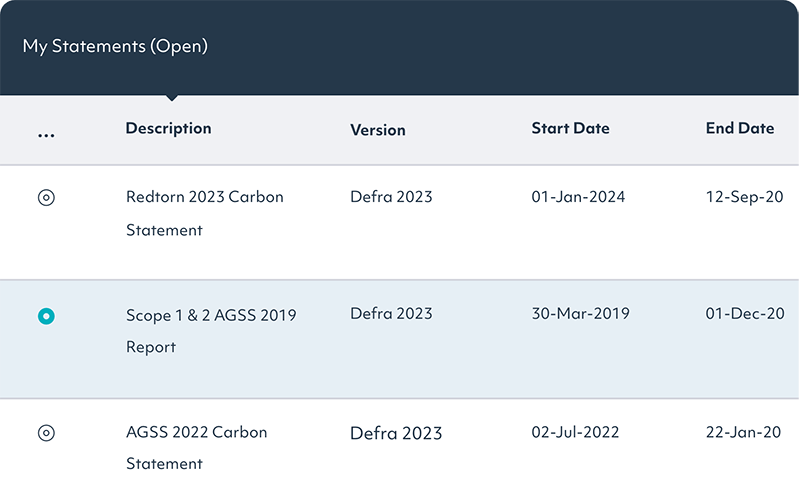
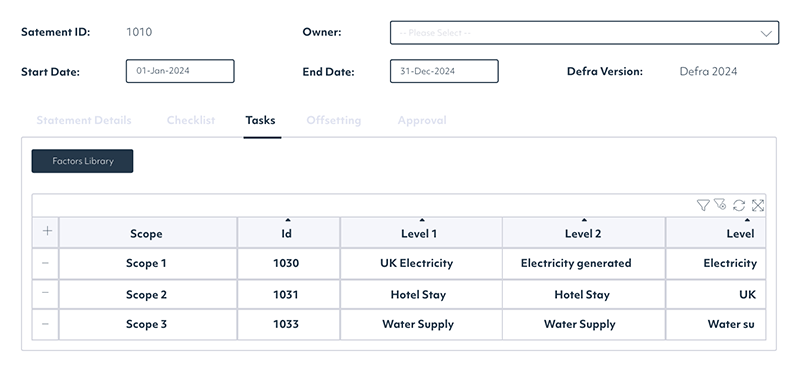
Are your customers requesting Carbon Accounting information? If your organisation is in need of accurate carbon calculations, particularly for scope 1 & 2 emissions, the Singlepoint Carbon Calculator is a simple solution to what can be a complex process of calculation. Our solution provides easy-to-understand user guides, explains complex terminology and offers a user-friendly tool for recording carbon data across every area of your business. From this you can create clear reports and use intuitive dashboards for tracking your carbon management efforts.

Utilities Manager
Singlepoint Utilities Manager revolutionises utility management by offering a comprehensive, user-friendly solution for monitoring and reducing consumption across energy, temperature, humidity, and water. Using battery-powered sensors for immediate scalability, Singlepoint Utilities Manager provides insights into usage patterns, immediate alerts, and data-driven analysis. Within weeks, users can monitor metrics, analyse utility use, integrate live data, accurately charge machines, address consumption efficiently, detect early faults and optimise their entire operation for cost savings.
Automate carbon footprint calculation
The Carbon Calculator seamlessly integrates into Singlepoint, offering an automated solution for generating detailed carbon footprints at various organisational levels.

Identify major emissions sources
The Carbon Calculator integrates with Singlepoint’s Utilities Manager, providing a unified solution for managing both carbon emissions and utility consumption. This combination offers a detailed view of how energy, water, and other utilities impact overall carbon footprint, enabling targeted reductions in both emissions and utility costs.
Consolidate your data in a single platform
Simplify the complex task of tracking carbon emissions, energy consumption, and supply chain compliance by centralizing your data onto one unified platform. This consolidation enables precise measurement of your carbon footprint across direct (Scope 1), indirect energy (Scope 2), and all other indirect emissions (Scope 3), streamlining your sustainability efforts.

Capture and visulise data in real-time
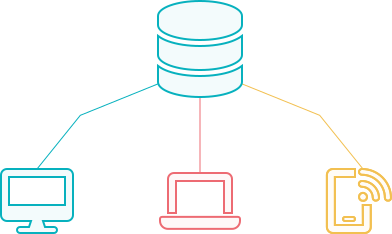
Leverage Singlepoint’s capabilities for immediate data capture and visualisation to stay informed about energy trends and emission trajectories. Utilise comprehensive BI dashboards to accurately assess your environmental impact, allowing for more informed decision-making and strategic planning in managing your organisation's environmental impact.
Get our QMS factsheet
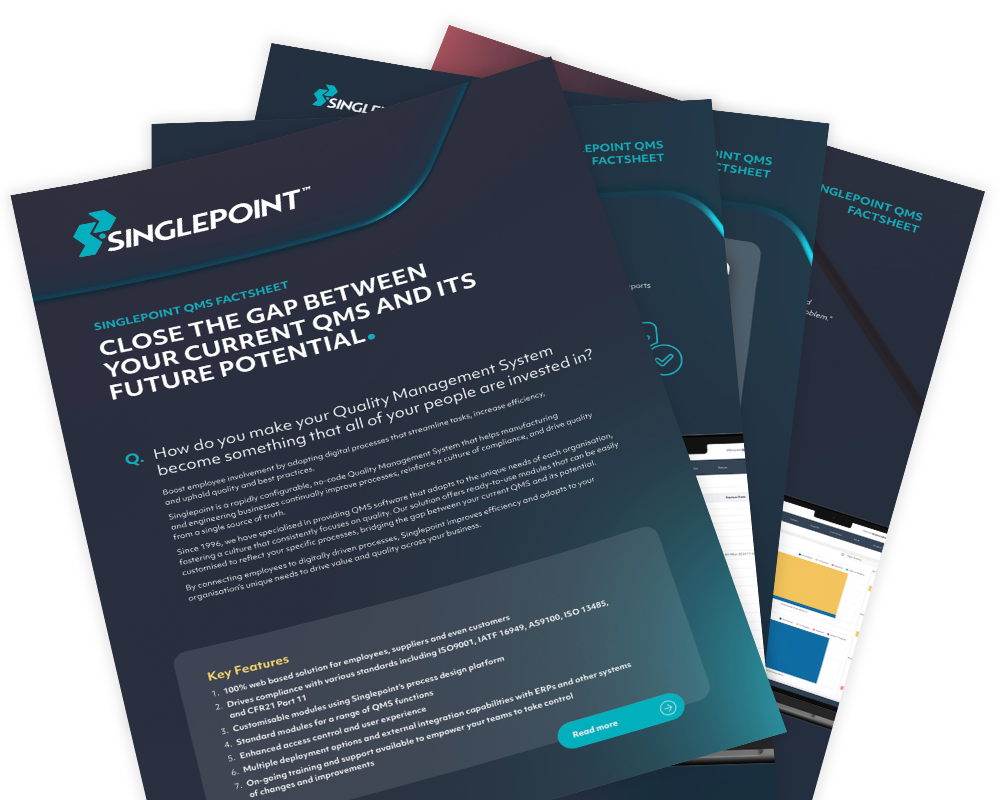
Download our factsheet to learn more about how Singlepoint’s quality management software can help you.
Case studies

Surface Transforms: Document Control and Training Management
Thanks to Singlepoint, Surface Transforms has significantly upgraded their document control and safety processes. The software has catalysed a paperless revolution on the shop floor, instilling greater confidence in their operational practices.
Doncasters Trucast: Business Intelligence enhances efficiency
Singlepoint Business Intelligence has redefined data interaction for Doncasters Trucast, giving staff and managers instant insight into manufacturing performance
Fablink: NPI and APQP
Fablink redefines project management in the automotive industry with Singlepoint, gaining total visibility into NPI and APQP tasks
ZF: Document Control and Management
ZF revolutionises document management with Singlepoint, leading to significant time savings and risk reduction.
Teleflex: Customised complaints module enhances global operations
Senior Quality Engineer Tineke Soors praises Singlepoint for transforming Teleflex’s customer complaint handling, making it more efficient and transparent.

Pactrol: Customised workflows streamlining cross-border operations
Explore the journey of Pactrol Controls Ltd as they navigate the challenges of relocating manufacturing to Hungary while maintaining operational excellence.

United Language Group: Achieving global compliance with Competency Checker
Facing challenges with the new QMS standards, United Language Group successfully integrated the Competency Checker module alongside existing modules.
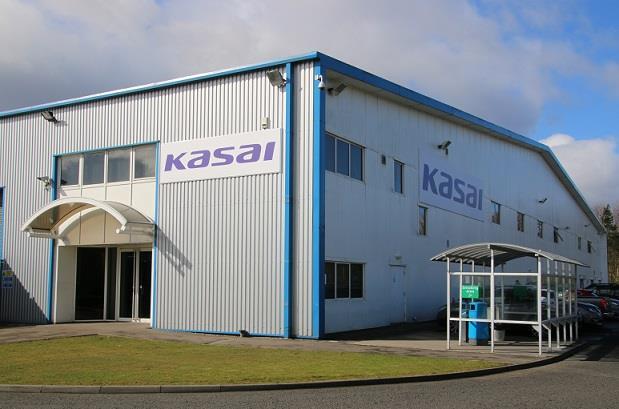
Kasai: Improving Engineering Change Processes
Kasai, a global front-runner in automotive interior and exterior manufacturing, faced challenges with its engineering change process that revolved around complex spreadsheets and scattered communications.
Metrol: Calibration Manager
Metrol Technology’s journey with Singlepoint’s Calibration Manager is a testament to the power of a single source of truth. Witness a transformation marked by efficient workflows, user empowerment and the unmatched versatility of Singlepoint.

Bandvulc: From disjointed audits to streamlined efficiency
Hitachi Rail Europe, Ltd. is a wholly owned subsidiary of Hitachi, Ltd. and a total railway system supplier offering rolling stock, traction equipment, signalling, traffic management systems and maintenance centres.
FAQs
What are Scope 1, Scope 2, and Scope 3 emissions, and why do businesses need to measure all three?
Scope 1 covers direct emissions, Scope 2 covers purchased energy, and Scope 3 covers emissions across the value chain. Measuring all three provides a complete view of environmental impact and supports customer and regulatory requirements.
What is ESG software, and how does carbon management fit within a broader environmental, social, and governance reporting strategy?
ESG software helps organisations manage and report environmental, social, and governance performance. Carbon management is a key component, supporting emissions tracking, reduction targets, and sustainability reporting.
How does Singlepoint Carbon Management differ from standalone carbon accounting platforms?
Singlepoint Carbon Management connects emissions data with wider quality, compliance, and operational processes. This provides a more integrated approach than standalone carbon accounting tools focused solely on emissions reporting.
What is CSRD (Corporate Sustainability Reporting Directive), which businesses are affected, and when do UK manufacturers need to comply?
CSRD is an EU sustainability reporting framework affecting large companies and certain businesses operating within the EU. Compliance requirements vary based on company size, location, and reporting obligations.
What are SECR (Streamlined Energy and Carbon Reporting) obligations, and which UK businesses are required to report?
SECR requires qualifying UK companies to report energy use, carbon emissions, and energy efficiency actions. Requirements generally apply to large companies that meet specific size thresholds.
Our manufacturing business has been asked by a major customer to provide our Scope 1 and 2 emissions data as part of their supply chain due diligence. We have never measured this before. Where do we start?
Start by gathering fuel consumption and energy usage data. Carbon management software helps calculate emissions, maintain records, and establish a baseline for customer reporting and future reduction initiatives.