
Visual Navigator.
Singlepoint Visual Navigator is a configurable and customizable visual interface that gives every user a simpler way to navigate Singlepoint. Create role-specific interfaces that reflect how your teams work, giving employees direct access to the information, data and actions they need.



Give every user the right view
Each role in your organization has different needs. Operators need quick access to work instructions and drawings, engineers may need to raise engineering change requests, supervisors and managers need visibility of operational data, while senior leaders may want direct access to real-time dashboards. Visual Navigator lets you create interfaces around these different requirements rather than asking every user to navigate Singlepoint in the same way.
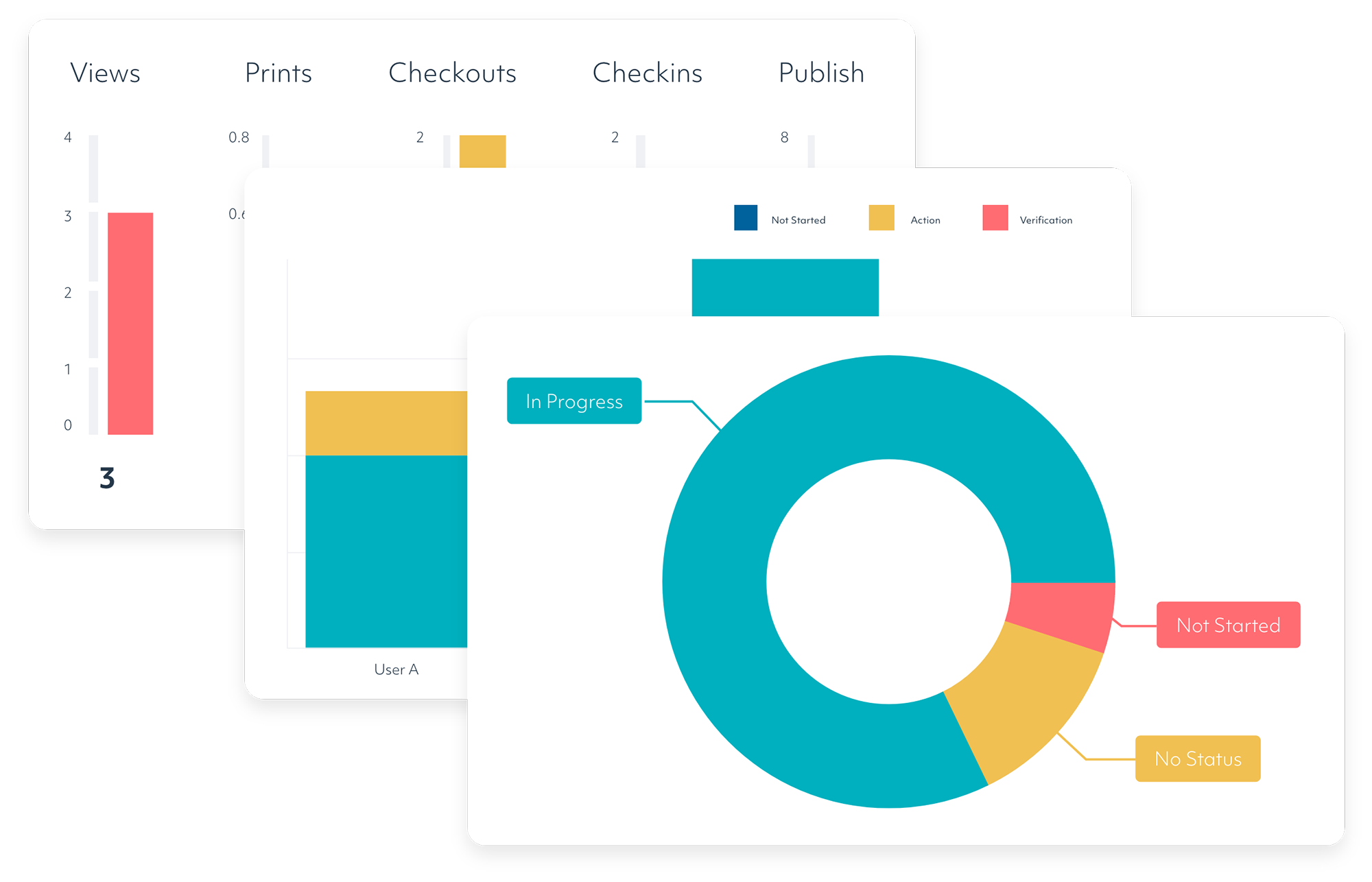
Navigate multiple layers of information
Visual Navigator allows users to navigate and access multiple layers of information through a visual interface. Interactive hotspots on images act as gateways to deeper, interconnected layers, giving users direct access to relevant documents, data and functionality.
Drive engagement through design
Create interfaces around the information and tasks your users actually need. By making Singlepoint easier to navigate for different roles, Visual Navigator helps employees spend less time searching for information and interact with processes in a way that reflects their day-to-day work.
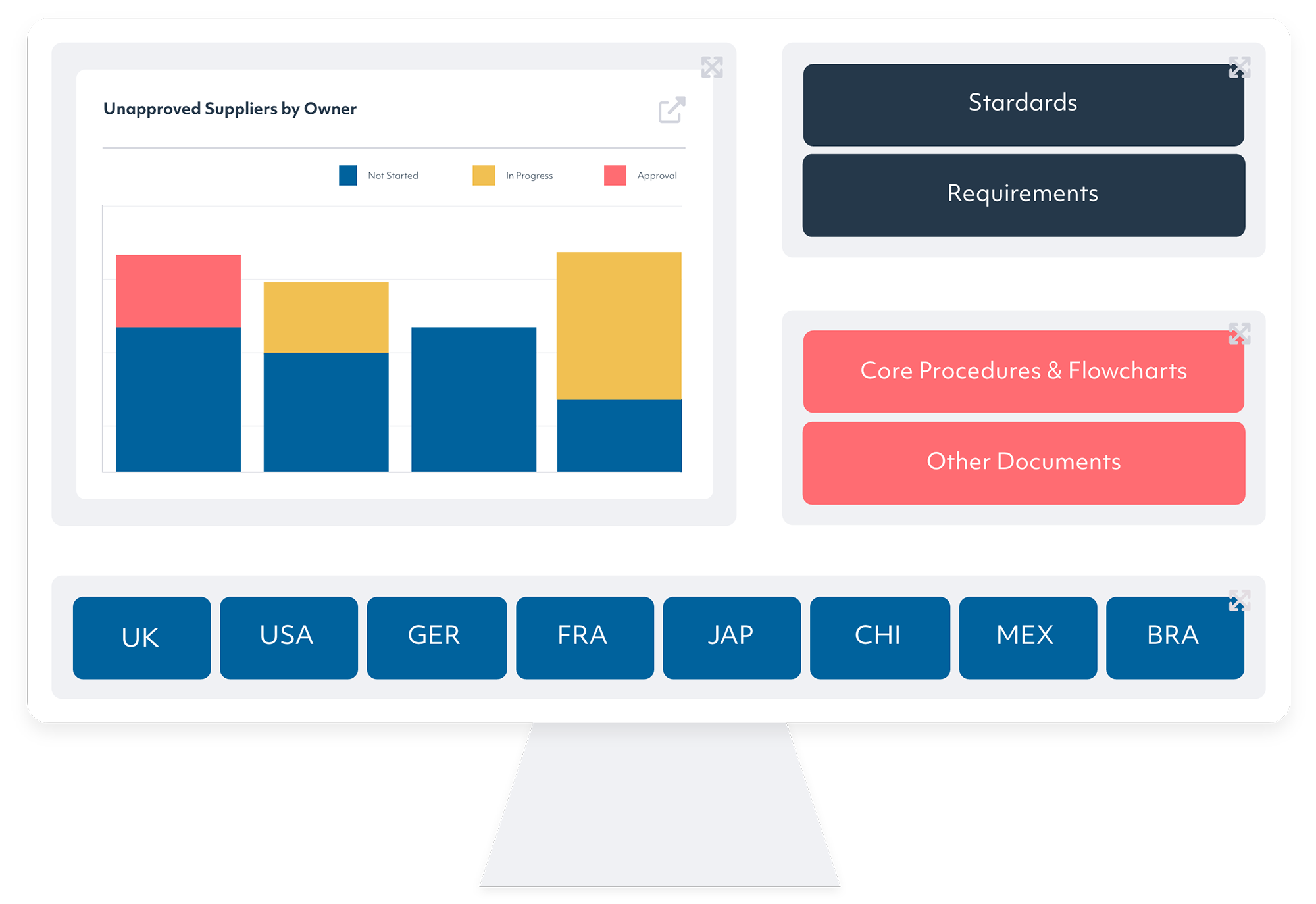
Integrate with third-party systems
Visual Navigator integrates with existing software, including ERP systems, Power BI and other business applications. Bring relevant information from different systems into the interface, giving users easier access to the tools and data they need from one place.
Customize Visual Navigator for every role
Create interactive hotspots
Create a wide variety of hotspots using images, parameterized SVGs, shapes and links. Embed real-time reports or even entire websites, giving users access to different types and layers of information from the same visual interface. Because hotspots are connected to the rest of Singlepoint, animated hotspots and the information they link to automatically update as changes are made to the underlying database.
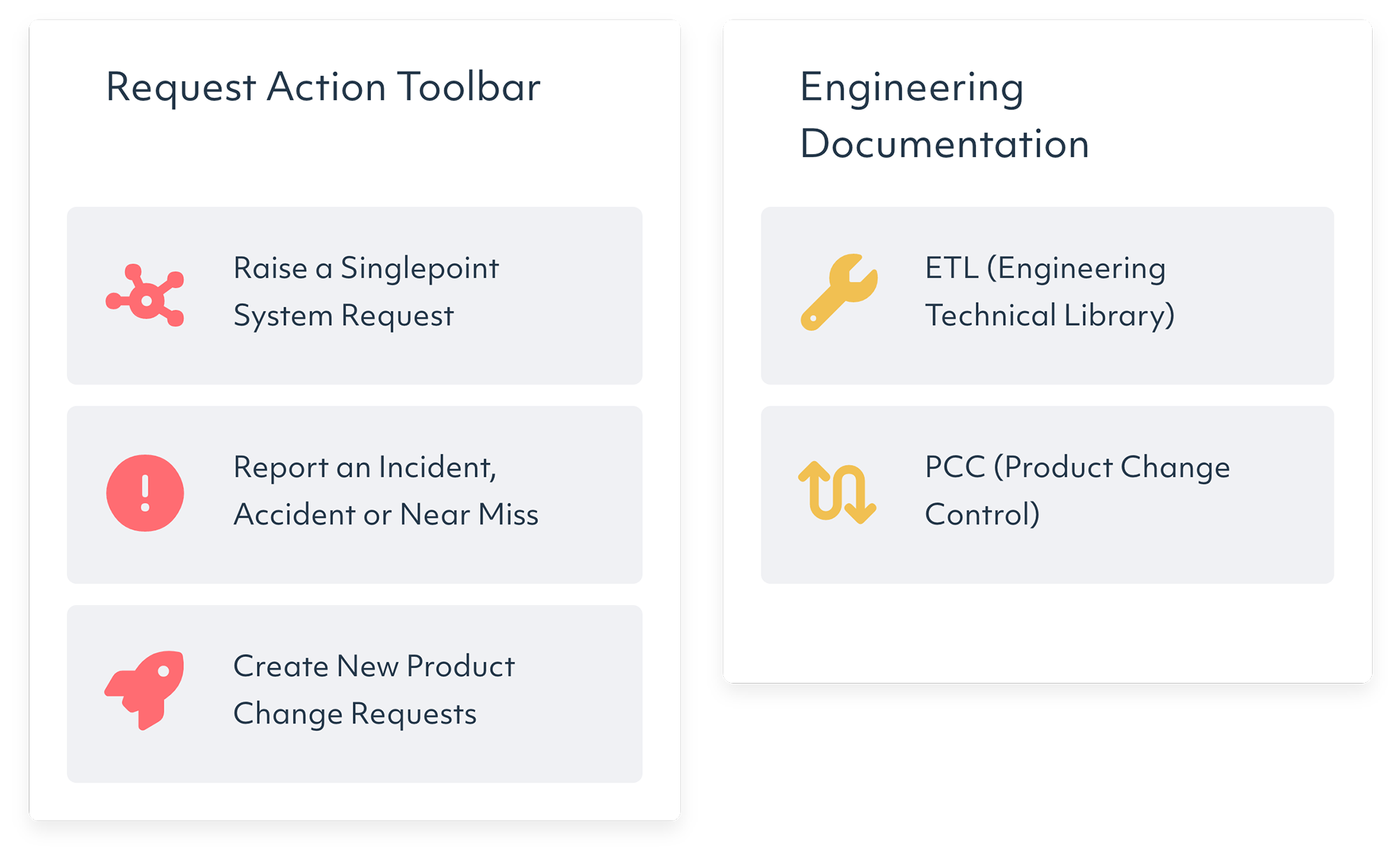
Take action from the interface
Visual Navigator goes beyond navigation by allowing users to initiate actions and workflows directly from the interface. Users can edit an object, create a new one or perform role-specific tasks. Engineers, for example, can raise issues directly through an action without having to navigate away from the relevant information.
Optimized for shop floor touchscreens
Visual Navigator is optimized for touchscreen use, giving shop floor employees quick access to the information and tasks they need. Workers can view designs, access instructions or report issues through an interface created around their working environment.
Simple to create and update
Visual Navigator's self-service approach allows you to drag, drop and design interfaces without complex development. Layer management keeps images and content organized within a clear structure, making interfaces easier to navigate and maintain as your requirements change.
"For manufacturing companies of any size, Singlepoint scales really well. It gives you a lot of flexibility and power without a stupidly high price tag."
- Horizons.
Get our QMS fact sheet
Download our fact sheet to learn more about how Singlepoint’s quality management software can help you.
Our case studies

Horizons: From barely visible to ISO 9001 audit-ready
Horizons Incorporated had a document control system, but adoption never spread beyond the core quality team. At audit the answer was technically yes; in practice, most of the workforce did not know it existed. After evaluating six vendors, Horizons chose Singlepoint for its concurrent user licensing, visual navigation, and cross-module traceability. A back-end migration from Waypoint kept implementation to weeks, not months. The result: whole-workforce access without per-seat cost, a complete corrective action audit trail, and a first surveillance audit that impressed an examiner the team had never met. Adoption itself now serves as a live quality signal.

Doncasters Trucast: Strengthening NPI & Audit Governance
Doncasters Trucast, a recognised leader in precision investment castings and turbine components, needed to strengthen governance and traceability within its New Product Introduction process. Operating in highly regulated mobility and aerospace-related markets, the business required a more structured, auditable and scalable approach to gated project management. By implementing Singlepoint’s configurable NPI module, Doncasters Trucast introduced electronic gate approvals aligned to regulatory standards, improving visibility, accountability and compliance. The result has been sustained zero audit findings related to NPI for over three years, alongside reduced administrative burden and improved real-time insight for engineering, quality and customer-facing teams.
FMP: Delivering 4,000 Hours of Efficiency Gains
FMP, one of the UK’s leading manufacturers of medical devices and healthcare products, needed to replace its manual, paper-based processes with a more efficient, compliant system. After evaluating 15 platforms across two review cycles, Singlepoint stood out as the clear leader for its flexibility, scalability and ease of use. By implementing Singlepoint’s document management and training modules, FMP achieved measurable time savings of 4,000 hours per year and significantly improved audit readiness.

Faltec: ERP Integration and Audit Efficiency
Faltec Europe streamlined operations and enhanced compliance by replacing outdated systems with Singlepoint. Discover how seamless ERP integration and centralised document management transformed their digital workflow.
UTAC: Driving Quality and Efficiency with Integrated Quality Management
UTAC UK, a leading provider of powertrain and engine testing services, faced challenges with outdated paper-based quality management processes. Senior Manager Peter Davies sought a modern, integrated solution to streamline operations across multiple sites. By implementing Singlepoint’s adaptable platform, UTAC UK digitised their entire quality management system, including document control, auditing and risk management
HiiROC: Streamlining Quality Management for Rapid Business Growth
“My rule of thumb is if my boss can find what they are looking for quickly, then the system works. With Singlepoint, anyone can now find documents in a few clicks. It has made things very easy for everyone” Keith Renouf, Head of HSEQ.
Amcor: Document Management
“Singlepoint is a very good system for control of documentation. You have everything on the system and it’s user-friendly. Everybody in the company can use it.” – Irene, Quality Systems Manager
Mentholatum: audit-ready under FDA scrutiny
The Mentholatum Company, a US OTC and consumer health manufacturer regulated under cGMP and 21 CFR Part 11, was managing quality documentation on local servers and network drives, with no single system of record, no reliable audit trail, and real exposure to ransomware. After a recommendation from its UK affiliate, Mentholatum deployed Singlepoint for document control across its Orchard Park and Horsham sites. A 2026 cloud migration removed dedicated server hosting and saved over $18,000 a year, while delivering 24/7 access for a three-shift operation. Every operator can now pull up a current, controlled SOP the moment an auditor asks.

Hitachi Rail: Multi-site implementation
Hitachi Rail Europe, Ltd. is a wholly owned subsidiary of Hitachi, Ltd. and a total railway system supplier offering rolling stock, traction equipment, signalling, traffic management systems and maintenance centres.

Gates Power Systems: Visual Navigator
Gates Power Systems enhanced their document management with Singlepoint’s Visual Navigator, linking ‘hotspots’ to manufacturing equipment images for precise document access.
FAQs
Can I customise the UI for different departments in my company?
Yes. Visual Navigator can be tailored to different departments, roles, or functions, ensuring employees see the processes, documents, and information most relevant to them.
Is there a steep learning curve associated with Visual Navigator?
No. Visual Navigator is designed to be intuitive and easy to use, helping employees quickly find information through a visual process-based interface.
What is Singlepoint Visual Navigator, and how does it differ from a standard document menu or folder hierarchy in a QMS?
Visual Navigator presents information through interactive process maps rather than folders. This makes it easier for users to understand processes and access relevant documents in context.
How does Visual Navigator stay current when documents or procedures are updated, and what happens to the process map?
Visual Navigator links directly to controlled documents. When documents are updated, users automatically access the latest approved versions without needing to change the process map structure.
How does Visual Navigator help demonstrate a documented process approach during an ISO 9001 external audit?
It provides a visual representation of organisational processes and their associated documents, helping auditors understand process interactions and evidence of a process-based management system.
Our employees rarely engage with the QMS because they struggle to find the right procedures for their role. How does a visual process interface solve this?
A visual interface guides employees through processes and provides direct access to relevant information. This reduces searching, improves engagement, and encourages consistent process compliance.
How does Singlepoint Visual Navigator connect document control, training requirements, and audit findings so employees can access everything relevant to their role from a single process view?
Visual Navigator links processes with documents, training records, audits, and other QMS activities. This provides a single point of access to information required for each role or process.